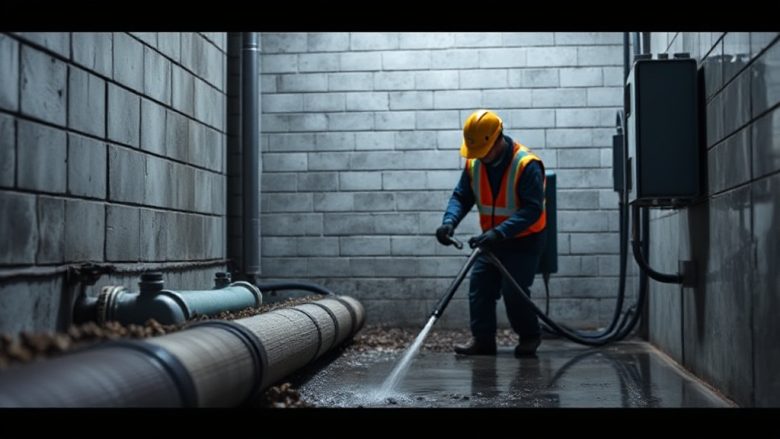
Blocked Drains in Jardim Anália Franco: Common Mistakes and How to Avoid Them
Something changed in Jardim Anália Franco over the past few years: the buildings got taller, the restaurant kitchens multiplied, and the old clay and cast-iron drain lines under many streets are now carrying far more load than they were designed for. That means a slow drain in a 1990s apartment block is no longer just a nuisance; it is often the first sign of a shared line that is already half blocked. If you are searching for a desentupidora em Jardim Anália Franco São Paulo SP, the fastest way to waste money is to repeat one of the mistakes below. I handle these tickets as a support technician, and I see the same handful of errors every week.
Why does the same drain keep blocking in this neighbourhood?
Most repeat blockages in Jardim Anália Franco are not bad luck. They are the result of a fix that treated the symptom and left the cause in the pipe. A plunger clears the water; it does not remove the grease mat, the root hairs, or the collapsed section further down the line.
When a resident calls back three weeks after a cheap clearing, the pattern is almost always the same. The first technician cleared the nearest trap, charged for an emergency visit, and never ran a camera or jetted the full run. The blockage returns because the real restriction was two or three metres downstream.
Mistake 1: treating an emergency call as a one-off job
An emergency visit is designed to restore flow, not to diagnose the network. If your building has had two or more blockages in the same stack within a year, the correct next step is an inspection, not another emergency call. Ask for the line to be jetted and checked, not just poked.
Mistake 2: hiring on price alone during a flood
When water is rising in a ground-floor shop, price feels like the only variable. In practice, the cheapest call-out often becomes the most expensive outcome because it does not include proper equipment. A team without a high-pressure jetter or a camera cannot do more than a homeowner with a plunger.
What should you check before you call a desentupidora?
Before you dial, spend two minutes identifying what is actually backing up. This single step changes which service you need and prevents the technician from arriving unprepared.
- One fixture or several? A single slow sink points to a local trap; multiple fixtures backing up at once points to a shared branch or the main line.
- Is there a smell? Sewer odour with slow drainage usually means a blocked vent or a partially blocked soil stack, not just a clogged trap.
- Where is the inspection cover? Know where your access point is so the team does not have to break anything to reach the line.
- Has it happened before? Note the date of the last blockage; a pattern is the strongest evidence that a camera inspection is needed.
If you can answer those four questions, you can describe the problem accurately and get a realistic quote instead of a vague hourly rate.
Which clearing method fits which blockage?
Not every blockage is solved by the same tool, and a technician who only carries one tool will always recommend that one. The table below is the comparison I use when explaining options to residents and building managers.
| Method | Best for | Limitation |
|---|---|---|
| Manual auger or plunger | Local traps, sinks, toilets | Cannot reach shared lines or remove grease mats |
| High-pressure hydrojetting | Grease, scale, roots, sediment in mains | Requires access and a properly sized jetter |
| Camera inspection | Diagnosing cracks, collapses and root intrusion | Diagnoses but does not clear on its own |
| Septic tank cleaning | Properties not connected to the mains | Only relevant where a tank exists |
For most shared residential lines in this area, hydrojetting followed by a camera check is the combination that actually solves the problem rather than postponing it. A desentupidora Jardim Anália Franco team that offers both can confirm the pipe is clear and structurally sound before leaving.
What are the most expensive mistakes building managers make?
Condominium managers carry more risk than individual homeowners because a wrong decision affects dozens of units. The costly errors tend to be administrative rather than technical.
Mistake 3: skipping preventive maintenance until something bursts
A scheduled jetting of the main stack once a year costs far less than an emergency call at midnight plus water damage in the lobby. Buildings with heavy kitchen use should treat annual cleaning as a fixed line item, not a contingency.
Mistake 4: letting multiple contractors work without records
If three different companies have cleared the same line over two years and nobody kept notes, the next technician starts from zero. Keep a simple log of dates, methods and findings; it is the cheapest diagnostic tool a building has.
Mistake 5: ignoring the grease trap in commercial kitchens
Restaurants and bakeries in the area often blame the municipal line when the real problem is their own undersized or neglected grease trap. Cleaning the trap on schedule prevents the fat from ever reaching the shared pipe.
How do you avoid being overcharged or misled?
The most common complaint I hear is not about the work itself but about the bill. Avoiding that starts before the technician arrives.
- Ask for the price of the visit and the price of the clearing separately, in writing if possible.
- Confirm whether the quote includes hydrojetting or only manual rodding.
- Ask whether a camera inspection is included and what it costs if the line turns out to be damaged.
- Request a written summary of what was found, especially if the line is shared.
A clear scope before work begins is the single best protection against a surprise invoice. If a company cannot explain what it will do and why, that is a warning sign, not a negotiation tactic.
It also helps to know what is genuinely urgent. A slow drain in a guest bathroom can wait until morning; sewage backing into a ground-floor unit cannot. Matching the urgency to the situation prevents you from paying emergency rates for a problem that could have been scheduled.
When should you stop troubleshooting and call a professional?
DIY attempts have a place, but they also cause a share of the damage I see. Chemical drain cleaners are the worst offender: they can corrode older pipes and they rarely clear a full blockage, so the pipe is weakened and still blocked when the technician arrives.
Call a professional when water backs up in more than one fixture, when there is a sewage smell that does not go away, when you hear gurgling from other drains, or when the same line has blocked twice in a year. Those are signs that the problem is in the network, not in the trap.
For residents and managers who want a single point of contact for emergencies, hydrojetting and tank cleaning, a desentupidora Jardim Anália Franco São Paulo SP service that operates around the clock is the practical choice. The value is not just speed; it is having the right equipment on the first visit so the job is done once.
Frequently asked questions
How much does a drain clearing usually cost in Jardim Anália Franco?
Prices vary with access, depth and method, so any fixed figure quoted over the phone is a guess. Ask for the visit fee and the clearing fee separately, and confirm whether hydrojetting and camera inspection are included.
Can I use chemical drain cleaner before the technician arrives?
Avoid it, especially in older buildings. Chemical cleaners can damage pipes and leave a hazardous residue that the technician then has to handle. Mechanical clearing is safer and more effective.
How often should a building have its main line jetted?
Once a year is a reasonable baseline for residential buildings with normal use. Buildings with restaurants or heavy kitchen loads may need more frequent cleaning, decided after the first inspection.
What is the difference between unblocking and hydrojetting?
Unblocking restores flow by pushing through the obstruction. Hydrojetting cleans the full inner wall of the pipe with high-pressure water, removing grease and scale so the blockage is less likely to return.